
Cold Water Survival
Maintaining body temperature is crucial to cold-water survival. When you’re in cold water, do not swim unless you can reach a nearby boat, fellow survivor or floating object. Movement lowers body temperature – even good swimmers drown while swimming in cold water.
If a nearby floating object is large, pull as much of your body as possible out of the water and onto the float. The more your body remains out of water, the less heat it will lose. Do not use survival flotation methods that involve submerging your face in cold water. Keeping your head above water will conserve heat and increase survival time.
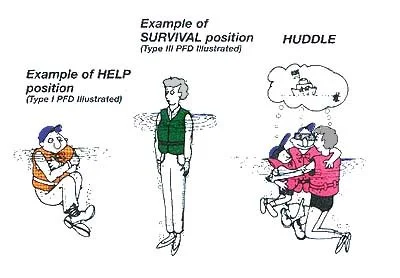
Floating in the HELP position will lessen heat loss. However, if you are wearing a Type III PFD, or if the HELP position causes your face to become submerged, bring your arms and legs straight down and hold them tight to your sides while keeping your head tilted back. Whenever possible, keep arms snug to the body under the lifejacket. This is called the SURVIVAL position.
If others are in the water with you, HUDDLE together for warmth. Keep a positive outlook – it will increase your survival chances. Always wear your lifejacket. Even if you become helpless from hypothermia, your lifejacket will help keep you afloat.
The Facts on Hypothermia and Cold Weather
Cold water (less than 70° F) can lower your body temperature, causing hypothermia. If your body temperature drops too low, you may pass out and then drown. The human body cools 25 times faster in cold water than it does in air.
Water temperature, body size, body fat percentage and movement in the water each play a part in cold-water survival. Small people cool faster than large people; children cool faster than adults.
Lifejackets can help you survive cold water. They let you float without using energy while insulating your body from cold water. A snug-fitting lifejacket is better than a loose-fitting one. When you boat in cold water, use a flotation coat or flotation coverall. In cold water these are preferred to vests as they cover more of your body and help maintain your core body temperature.
How Hypothermia Affects Most Adults
Water Temperature (Fahrenheit)
32.5 degrees
32.5 to 40 degrees
40 to 50 degrees
50 to 60 degrees
60 to 70 degrees
70 to 80 degrees
Over 80 degrees
Exhaustion or Unconsciousness
Under 15 minutes
15 to 30 minutes
30 to 60 minutes
1 to 2 hours
2 to 7 hours
2 to 12 hours
Indefinite
Expected Time of Survival
Under 15 to 45 minutes
30 to 90 minutes
1 to 3 hours
1 to 6 hours
2 to 4 hours
3 hours to indefinite
Indefinite